
"Filipino coffee history"
146000 article(s) found
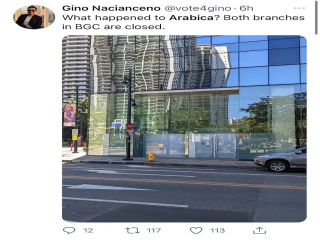
% arabica Coffee has been abandoned by foreign cooperative agents to create a Philippine local coffee brand.
Some time ago, the coffee workshop reported that Filipino netizens posted that all local arabica coffee shops suddenly locked their doors, so local netizens and the media asked% arabica if he was going to withdraw from the Philippine market. Later,% arabica announced him on Facebook.
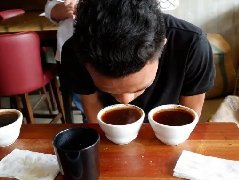
Philippine Coffee: seeking Development in the double barriers of abnormal Climate and cheap imported Coffee
Professional coffee knowledge exchange more coffee bean information please follow the coffee workshop (Wechat official account cafe_style) the Philippines is a coffee producer. The country's different topography and climate make it suitable not only for growing Robusta, but also for Arabica, Liberia and Excelsa. But in recent years, the Philippines has not produced enough to support its coffee consumption.
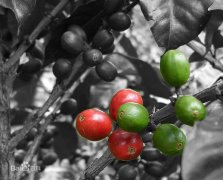
The Philippines also has coffee with Filipino coffee flavor.
Coffee was introduced into the Philippines (Philippines) in the early 19th century, and by 1880 the country had become the fourth largest coffee exporter in the world. However, due to the spread of coffee rust, the country became a coffee importer shortly after 1880. However, the coffee growing industry has gradually recovered. Today, after slow and steady development, the country's coffee industry continues to grow and develop quality.
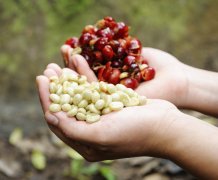
The production zone of high-priced Filipino coffee beans.
Philippines (philippine) there is a coffee bean in the world that sells for $600,000 per kilogram, which is a little lower than the so-called perfect Blue Mountain coffee bean at $700per kilogram. What are raccoon coffee beans? According to the custom of naming coffee beans after the origin of coffee. Is it possible that raccoon coffee beans come from raccoons. This coffee bean is actually raw.
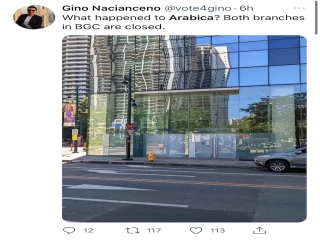
Philippines% arabica suddenly closed all Arabica Coffee official account suddenly cancelled?!
On January 30th, Filipino netizens announced on the social platform that the% Arabica store in Dayi City, Philippines was suddenly closed! Subsequently, netizens in other parts of the Philippines also posted online that% of the Arabica stores in the Philippines were also closed. Due to the sudden% Arabi

Philippine Coffee planting area Brand advantage Flavor description Taste Manor introduction
Philippine Coffee acreage Brand advantage Flavor description Taste Manor introduces the Philippine coffee market: today, after slow and steady development, the country's coffee industry is growing and has great potential to develop high-quality varieties. The Philippine coffee industry is operated by the national industrial and trade department, but it is loosely managed, while all coffee exports are operated by private companies. Filipino coffee.

Coffee grounds can also be artistic.
Livabranda, a Filipino nursing student, has a pair of magical hands. She uses the coffee grounds we usually drink to create wonderful and lovely paintings, some with 3D effects. Liva said she was inspired by her father. Her father is a coffee drinker who always pours out a lot of coffee grounds after drinking coffee. Liva himself

Expensive cat dung coffee
Filipino farmers who grow coffee once tried to kill civets because they stole coffee fruits and later found that civets could help them make a lot of money. Nowadays, for some farmers, civets are geese that lay golden eggs, so it is more comfortable to be caged. We never dreamed that we could make money from them, Rustico Montenegro told AFP. 44-year-old

Coffee grounds painting a little bit of fun in life
Livabranda, a Filipino nursing student, has magical hands. She uses the coffee grounds we usually drink to create wonderful and lovely pictures, some with 3D effects. Liva said she was inspired by her father. Her father is a coffee drinker who always pours out a lot of coffee grounds after drinking coffee. Livazi

Philippine Cat poop Coffee helps Farmers get Rich
Filipino farmers who grow coffee once tried to kill civets because they stole coffee fruits and later found that civets could help them make a lot of money. We never dreamed that we could make money from them. Rustico Montenegro told Agence France-Presse. The 44-year-old began picking up coffee beans from civet droppings a few years ago. Civet cats live in the jungle and inhabit trees.

Is Kopi Luwak the most expensive coffee in the world?-one less Kopi Luwak may save one.
Kopi Luwak, also known as civet coffee (English: civet coffee, Indonesian: Kopi Luwak, Filipino: kape motit, kape alamid, kape mel, kape musang). Kopi Luwak is the second most expensive coffee in the world, with a price of several hundred dollars per pound. It is extracted from the feces of civets and processed, which is eaten by civets.

Where did Kopi Luwak come from? the price of Kopi Luwak
Following caf é comments (Wechat official account vdailycom) found that Beautiful Cafe opened its own shop Kopi Luwak, also known as civet Coffee (English: civet coffee, Indonesian: Kopi Luwak, Filipino: kape motit, kape alamid, kape mel, kape musang). According to Indonesian, Kopi means coffee and Luwak means civet. Kopi Luwak
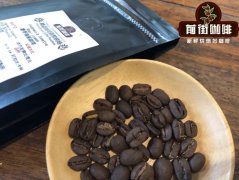
The flavor and taste characteristics of high-priced cat shit coffee beans from Indonesia and the origin of the story behind them.
Kopi Luwak, I believe everyone has heard of it! Kopi Luwak produces very little, and goods are scarce, so his price is very high. Do you know where it is of origin? Why is he called Kopi Luwak? With these questions, let's take a look at this Kopi Luwak from Qianjie Coffee. According to Qianjie, it is known that civets live mainly in Indonesia, which is below 2100 meters above sea level.

What is the new breed of coffee in Barako? What effect can Barraco coffee have on the third wave?
Can the third wave save traditional coffee varieties from extinction? Barraco coffee has a strong smell and unique flavor and has a history of more than 200 years in the Philippines. Nowadays, it is difficult to find a place in the hearts and cups of the younger generation-but some Filipinos are asking if there is enough room for the third wave. What is KAPENG BARAKO? Carpengbalaco

Why is Kopi Luwak so expensive? is Kopi Luwak delicious? is it really made of shit?
For more information on coffee beans, please follow the coffee workshop (Wechat official account cafe_style) Kopi Luwak (Kopi Luwak), also known as civet coffee (English: civet coffee, Indonesian: Kopi Luwak, Filipino: Kape Motit, Kape Alamid, Kape Mel?, Kape Musang). In Indonesian, Kopi means coffee.
Philippine Coffee introduces Philippine Coffee Flavor Philippine Coffee characteristics Philippine Coffee taste
Philippine coffee was introduced into the Philippines (Philippines) in the early 19th century, and by 1880 the country had become the fourth largest coffee exporter in the world. However, due to the spread of coffee rust, the country became a coffee importer soon after 1880. However, the coffee growing industry has gradually recovered. The origin of coffee in the Philippines: the Philippines is less able to grow 4 varieties of coffee
Boutique coffee bean producing countries introduce Philippine coffee
Coffee was introduced into the Philippines (Philippines) in the early 19th century and by 1880 the country had become the fourth largest coffee exporter in the world. However, due to the spread of coffee rust, the country became a coffee importer soon after 1880. However, the coffee growing industry has gradually recovered. Coffee production in the Philippines: the Philippines is one of the few countries that can grow four varieties of coffee.
Basic knowledge of Fine Coffee Coffee from the Philippines
Coffee was introduced into the Philippines (Philippines) in the early 19th century and by 1880 the country had become the fourth largest coffee exporter in the world. However, due to the spread of coffee rust, the country became a coffee importer soon after 1880. However, the coffee growing industry has gradually recovered. Coffee production in the Philippines: the Philippines is one of the few countries that can grow four varieties of coffee.

Global Coffee producing area-Philippine Coffee Market
Coffee was introduced into the Philippines (Philippines) in the early 19th century and by 1880 the country had become the fourth largest coffee exporter in the world. However, due to the spread of coffee rust, the country became a coffee importer soon after 1880. However, the coffee growing industry has gradually recovered. Coffee production in the Philippines: the Philippines is one of the few countries that can grow four varieties of coffee.
Global coffee producing area-Philippines
Coffee was introduced into the Philippines (Philippines) in the early 19th century and by 1880 the country had become the fourth largest coffee exporter in the world. However, due to the spread of coffee rust, the country became a coffee importer soon after 1880. However, the coffee growing industry has gradually recovered. Coffee production in the Philippines: the Philippines is one of the few countries that can grow four varieties of coffee.